
You are using an out of date browser. It may not display this or other websites correctly.
You should upgrade or use an alternative browser.
You should upgrade or use an alternative browser.
Suck it Saban!
- Thread starter HillsboroDuck
- Start date

@creepycoug doesn't need your blue blood affirmations.

HillsboroDuck
New Fish
@creepycoug doesn't need your blue blood affirmations.
He really respects #1

whatshouldicareabout
Active poster
https://twitter.com/fightonrusty/status/1625168812726456320?s=46&t=mbd2IuhU7irK7OxO4Qb0UQ
We beat Bama and MSU!
Suck it Saban times 2!
creepycoug
Well-known poster
@creepycoug doesn't need your blue blood affirmations.
He really respects #1
You are confusing me with another luminary on this board.
#@racebannon
creepycoug
Well-known poster
@creepycoug doesn't need your blue blood affirmations.
Candidly, I'm always pleasantly surprised when Miami makes any list that is based on "all-time" anything given that we? were mostly sleeping through the first .75 of the last century (and most of this one thus far).
#eatitirish
#plusone

GrundleStiltzkin
New Fish
@creepycoug doesn't need your blue blood affirmations.
Candidly, I'm always pleasantly surprised when Miami makes any list that is based on "all-time" anything given that we? were mostly sleeping through the first .75 of the last century (and most of this one thus far).
#eatitirish
#plusone
carefulº

It appears UW should still want to be Florida State of the West. Rick was right!!!!

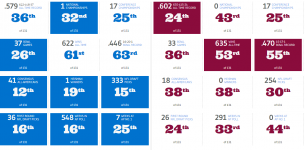
It's always impressive to me how well UCLA does in a lot of historical metrics given they've been incredibly mediocre for more than 30 years.

@creepycoug doesn't need your blue blood affirmations.
Candidly, I'm always pleasantly surprised when Miami makes any list that is based on "all-time" anything given that we? were mostly sleeping through the first .75 of the last century (and most of this one thus far).
#eatitirish
#plusone
Random fact: Miami was supposed to play in Husky Stadium in 1979, but they backed out in the spring/summer of 1979. Mike Lude had to scramble to come up with a replacement.
It's always impressive to me how well UCLA does in a lot of historical metrics given they've been incredibly mediocre for more than 30 years.
Arizona State has always been called the sleeping giant that hasn't done anything. But historically they have accomplished more than UCLA.

@creepycoug doesn't need your blue blood affirmations.
Candidly, I'm always pleasantly surprised when Miami makes any list that is based on "all-time" anything given that we? were mostly sleeping through the first .75 of the last century (and most of this one thus far).
#eatitirish
#plusone
Random fact: Miami was supposed to play in Husky Stadium in 1979, but they backed out in the spring/summer of 1979. Mike Lude had to scramble to come up with a replacement.
In 1979, Schnellenberger arrived to a University of Miami program that was struggling. The program was nearly dropped by the university just a few years earlier. Drawing from the boot camp methodology learned from mentors Bryant and Shula and a pro-style pass-oriented playbook not yet the norm in college football, Schnellenberger introduced a passing game at Miami that gave them advantage over teams not equipped to defend such an aggressive offensive passing attack. By his third season at Miami, the team had twice finished the season in the AP Poll's Top 25, something that had not happened for Miami since 1966.
Schnellenberger revolutionized recruiting South Florida high school talent by building a metaphorical "fence around South Florida" and recruiting only the "State of Miami." His eye for talent in this area led to many programs around the nation paying greater attention to South Florida high school prospects. Under his "State of Miami" plan, Schnellenberger's teams took the best from the three-county area around the city, went after the state's best, then aimed at targets among the nation's elite recruits; it became a model of how to recruit in college football.[19][20][21]
He coached Miami to its first national championship in 1983, defeating Nebraska in the Orange Bowl. Following the season, Schnellenberger resigned to become part-owner, president, general manager and head coach of The Spirit of Miami of the United States Football League, a relocated Washington Federals franchise. In August, however, the USFL announced that it would shift to a fall schedule. The owner-to-be for the Federals backed out of the deal, knowing he could not hope to compete head-to-head with the Miami Dolphins. A new backer moved the team to Orlando as the Renegades, but Schnellenberger opted not to follow the team to Central Florida.[22] Schnellenberger was replaced as head coach of the Hurricanes by Jimmy Johnson.
Schnellenberger was interviewed about his time at the University of Miami for the documentary The U, which premiered December 12, 2009, on ESPN.
Schnellenberger received the Golden Plate Award of the American Academy of Achievement in 1984.[23]
Schnellenberger was inducted into the University of Miami Sports Hall of Fame in 1993.
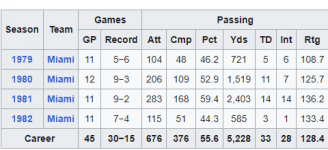
We also would have hosted a freshman Jim Kelley the same year we hosted Dan Marino
It's always impressive to me how well UCLA does in a lot of historical metrics given they've been incredibly mediocre for more than 30 years.
Arizona State has always been called the sleeping giant that hasn't done anything. But historically they have accomplished more than UCLA.
UCLA leads 23-15. ASU's greatest era was in the WAC under Kush


HairyBallsDawg
New Fish
So once USC & UCLA move to the B1G, Washington will be the leader for this stat in the remaining PAC. Somebody should figure out how to use that to our recruiting advantage.

dnc
New Fish
So once USC & UCLA move to the B1G, Washington will be the leader for this stat in the remaining PAC. Somebody should figure out how to use that to our recruiting advantage.
Tied with Colorado
creepycoug
Well-known poster
@creepycoug doesn't need your blue blood affirmations.
Candidly, I'm always pleasantly surprised when Miami makes any list that is based on "all-time" anything given that we? were mostly sleeping through the first .75 of the last century (and most of this one thus far).
#eatitirish
#plusone
Random fact: Miami was supposed to play in Husky Stadium in 1979, but they backed out in the spring/summer of 1979. Mike Lude had to scramble to come up with a replacement.
In 1979, Schnellenberger arrived to a University of Miami program that was struggling. The program was nearly dropped by the university just a few years earlier. Drawing from the boot camp methodology learned from mentors Bryant and Shula and a pro-style pass-oriented playbook not yet the norm in college football, Schnellenberger introduced a passing game at Miami that gave them advantage over teams not equipped to defend such an aggressive offensive passing attack. By his third season at Miami, the team had twice finished the season in the AP Poll's Top 25, something that had not happened for Miami since 1966.
Schnellenberger revolutionized recruiting South Florida high school talent by building a metaphorical "fence around South Florida" and recruiting only the "State of Miami." His eye for talent in this area led to many programs around the nation paying greater attention to South Florida high school prospects. Under his "State of Miami" plan, Schnellenberger's teams took the best from the three-county area around the city, went after the state's best, then aimed at targets among the nation's elite recruits; it became a model of how to recruit in college football.[19][20][21]
He coached Miami to its first national championship in 1983, defeating Nebraska in the Orange Bowl. Following the season, Schnellenberger resigned to become part-owner, president, general manager and head coach of The Spirit of Miami of the United States Football League, a relocated Washington Federals franchise. In August, however, the USFL announced that it would shift to a fall schedule. The owner-to-be for the Federals backed out of the deal, knowing he could not hope to compete head-to-head with the Miami Dolphins. A new backer moved the team to Orlando as the Renegades, but Schnellenberger opted not to follow the team to Central Florida.[22] Schnellenberger was replaced as head coach of the Hurricanes by Jimmy Johnson.
Schnellenberger was interviewed about his time at the University of Miami for the documentary The U, which premiered December 12, 2009, on ESPN.
Schnellenberger received the Golden Plate Award of the American Academy of Achievement in 1984.[23]
Schnellenberger was inducted into the University of Miami Sports Hall of Fame in 1993.
We also would have hosted a freshman Jim Kelley the same year we hosted Dan Marino
View attachment 55717
Some interesting (or not) things about that team, only a couple of which I could actually remember without wikipedia.
Played at No. 14 FSU, at No. 19 Penn State and at No. 1 Alabama and home against Florida and Notre Dame in Japan (wft?). I don't blame them for saying no thanks to Montlake, or maybe they got a bigger payday to go to Bamers and get hammered. Anyway, they wound up beating Penn State on the road in a break-out game for Jim Kelly. Little known fact: Jim Burt was a Hurricane and played on that team.
The win at PSU was considered a turning point for the program. Two years later in the '81 season, they did it again by beating then No. 1 Penn State on the road. That PSU team went 10-2, beat Trooj in the Fiesta and ended the season #3. It seemed around this time that people were starting to murmur about the upstarts from Coral Gables.
Last edited:


It's always impressive to me how well UCLA does in a lot of historical metrics given they've been incredibly mediocre for more than 30 years.
They were the 2nd best program in the Pac until 1991.