ChillyDawg
New Fish
Seattle Timeshttps://www.seattletimes.com/sports...d-forces-with-mike-hopkins-to-turn-around-uw/
Ken Cross: "Coach Hop" drops by and discusses the Dawgs' restructuring for 2021-22, his talented incoming transfers, the potential for veterans Jamal Bey and Nate Roberts this season.[/i]
Seattle Times (click for full article)https://www.seattletimes.com/sports...s-nails-approach-turn-around-huskies-program/
Will Mike Hopkins’ maniacal, tough-as-nails approach turn around Huskies’ program?
You can’t understand Hopkins, and how much he’s diving into the rebuild of the Huskies, without coming back to the sheer force of his personality. He exudes energy even when in seeming repose. “You’re not used to seeing anything like that in your lifetime,” says an ex-teammate.[/i]
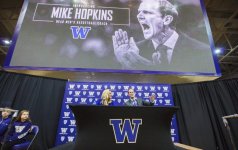
Mike Hopkins tends to cry easily.
It’s part of his makeup and a window into his psyche. The new Washington men’s basketball coach is a fount of passion, and he tends to become so emotionally invested in his players, in his work — in everything — that it leaves him highly vulnerable to what the emoji-driven world likes to call “all the feels.”
“It’s because I care so much,” he explains as he chokes up during an interview in his office while relating the story of when he told his mentor, Jim Boeheim, that he was leaving his Syracuse job as Boeheim’s heir apparent to head to Seattle; and again while telling the story of how proud he was of former Orange player Scoop Jardine for becoming the first person in his family to graduate from college; and again while telling the story of how his dad talked him out of transferring from Syracuse when he was a player, mired on the bench after two seasons.
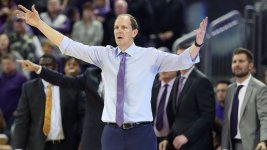
You can’t understand Hopkins, and how fully throttled he’s diving into the rebuild of the Huskies’ basketball program, without coming back to the sheer force of his personality. He exudes kinetic energy even when in seeming repose (a state rarely reached by a guy who is known to talk on two phones simultaneously, the better to squeeze more results into his waking day). He has brought a near-maniacal drive to basketball since his playing days; Boeheim admits he never thought Hopkins had the stuff to be anything but a role player (he became a two-year starter and team captain).
“Mike was a guy I frankly didn’t have high hopes for as a player,” Boeheim said in a phone interview. “He was more of a project guy. But he wanted to get better. He outworked everybody. He was on the floor 10 to 12 times every practice, and 10 to 12 times in the game. He became a very good college player.”
Granted, that’s pretty standard stuff in the sporting world — another yarn about an underdog with a chip on his shoulder and a caffeine-laced personality (eye-roll emoji) — but Hopkins takes it to an extreme that makes him stand out even within that cliché.
“Mike was a cross between an MMA guy and (UW rower) Joe Rantz from ‘The Boys in the Boat,’ ” says former Syracuse teammate Tim O’Toole, now an assistant coach at California. “He would have died fighting to succeed at ’Cuse.”
Marv Marinovich, a family friend and former NFL player, warned Hopkins when he went off to college in the rugged Big East that he was going to be perceived as soft because he came from Orange County in California (with flowing strawberry-blonde surfer hair, no less — Justin Bieber-like, in the words of his wife Tricia to Sports Illustrated). The first time someone challenges you, Marinovich told Hopkins, “you fight ’em like you’ve never fought before.”
Flash forward to one of his early practices at Syracuse in what turned out to be a redshirt first season in 1988. Every day was a test of survival among the star-studded cast he walked into that included Sherman Douglas, Billy Owens and Derrick Coleman, all future high NBA draft picks. But it was a walk-on, Dave Bartelstein, who pushed Hopkins’ buttons one day with his elbows and aggression.
Channeling Marinovich, Hopkins bopped him in the mouth. He didn’t get pushed around any more after that.
“Everyone was trying to test me from day one,” Hopkins said. “You had to set the tone. It was just fighting for your space and showing, ‘I’m here to play. I’m not here to just be an ornament.’ ”
You might think that story is apocryphal, maybe embellished for maximum effect. I contacted Bartelstein, now an executive with an investment firm in Chicago, for confirmation.
Hop File[/b]
“Of course I remember it,” he said with a laugh. “I still have the scar on my lip.”
Bartelstein explained that he and Hopkins were friends then and now, “but when we got between the lines, it was no holds barred. I was giving it to Mike more than he thought I should. I’m 5-11, he’s 6-4. He didn’t like a walk-on talking too much to him and showing him up, and the next thing you know, he had a fist in my face.
“He was a tough, hard-nosed guy. He didn’t care if it was me or Derrick Coleman, he’d go through you.”
Said O’Toole: “Hop is not going to back down for any human being. He’ll fight you in the most clean, human way.”
Leo Rautins, a former Syracuse star who had returned to the area, took a liking to young Hopkins and would engage him in after-hours workouts at Most Holy Rosary Parish. Rautins would try to toughen him up with the kind of trash talk and rough play he knew Hopkins would have to weather to succeed in the Big East.
“He loved it,’’ Rautins said. “He’d get pissed off but kept coming back for more.”
The Syracuse coaching staff saw this, ate it up and tucked it away. Tim Welsh, the assistant coach who picked up Hopkins at the airport when he arrived from California, remembers walking into Boeheim’s office and asking him, “How the heck is this kid going to play for us?”
Elaborating more than 25 years later, Welsh said, “I looked around the room, and we had Sherman Douglas and Stevie Thompson and Billy Owens and Derrick Coleman and Dave Johnson — all these men. And you have this little, skinny, pale kid from Southern California who weighed about a buck-fifty, buck-sixty.”
Welsh, who would go on to be the coach at Iona and Providence, began to be won over when Hopkins agitated Douglas so much in a 3-on-3 drill one day that Douglas swung an elbow and bloodied Hopkins’ nose. Hopkins went into Welsh’s office afterward and told him he would get back at Douglas by beating him out for the starting job. Welsh laughs at the memory, because Douglas at the time was a first-team All-American and the consensus choice as the top point guard in the nation.
“But I said, ‘You know what? I like this guy. He’s going to make it here,’ ” Welsh recalled. “I had my doubts, but he’s going to make it through grit, toughness and hard work. That has been his MO ever since. Just outwork and out-tough people.”
Seattle Times (click for full article)https://www.seattletimes.com/sports...s-nails-approach-turn-around-huskies-program/
Will Mike Hopkins’ maniacal, tough-as-nails approach turn around Huskies’ program?
You can’t understand Hopkins, and how much he’s diving into the rebuild of the Huskies, without coming back to the sheer force of his personality. He exudes energy even when in seeming repose. “You’re not used to seeing anything like that in your lifetime,” says an ex-teammate.[/i]
Mike Hopkins tends to cry easily.
It’s part of his makeup and a window into his psyche. The new Washington men’s basketball coach is a fount of passion, and he tends to become so emotionally invested in his players, in his work — in everything — that it leaves him highly vulnerable to what the emoji-driven world likes to call “all the feels.”
“It’s because I care so much,” he explains as he chokes up during an interview in his office while relating the story of when he told his mentor, Jim Boeheim, that he was leaving his Syracuse job as Boeheim’s heir apparent to head to Seattle; and again while telling the story of how proud he was of former Orange player Scoop Jardine for becoming the first person in his family to graduate from college; and again while telling the story of how his dad talked him out of transferring from Syracuse when he was a player, mired on the bench after two seasons.
You can’t understand Hopkins, and how fully throttled he’s diving into the rebuild of the Huskies’ basketball program, without coming back to the sheer force of his personality. He exudes kinetic energy even when in seeming repose (a state rarely reached by a guy who is known to talk on two phones simultaneously, the better to squeeze more results into his waking day). He has brought a near-maniacal drive to basketball since his playing days; Boeheim admits he never thought Hopkins had the stuff to be anything but a role player (he became a two-year starter and team captain).
“Mike was a guy I frankly didn’t have high hopes for as a player,” Boeheim said in a phone interview. “He was more of a project guy. But he wanted to get better. He outworked everybody. He was on the floor 10 to 12 times every practice, and 10 to 12 times in the game. He became a very good college player.”
Granted, that’s pretty standard stuff in the sporting world — another yarn about an underdog with a chip on his shoulder and a caffeine-laced personality (eye-roll emoji) — but Hopkins takes it to an extreme that makes him stand out even within that cliché.
“Mike was a cross between an MMA guy and (UW rower) Joe Rantz from ‘The Boys in the Boat,’ ” says former Syracuse teammate Tim O’Toole, now an assistant coach at California. “He would have died fighting to succeed at ’Cuse.”
Marv Marinovich, a family friend and former NFL player, warned Hopkins when he went off to college in the rugged Big East that he was going to be perceived as soft because he came from Orange County in California (with flowing strawberry-blonde surfer hair, no less — Justin Bieber-like, in the words of his wife Tricia to Sports Illustrated). The first time someone challenges you, Marinovich told Hopkins, “you fight ’em like you’ve never fought before.”
Flash forward to one of his early practices at Syracuse in what turned out to be a redshirt first season in 1988. Every day was a test of survival among the star-studded cast he walked into that included Sherman Douglas, Billy Owens and Derrick Coleman, all future high NBA draft picks. But it was a walk-on, Dave Bartelstein, who pushed Hopkins’ buttons one day with his elbows and aggression.
Channeling Marinovich, Hopkins bopped him in the mouth. He didn’t get pushed around any more after that.
“Everyone was trying to test me from day one,” Hopkins said. “You had to set the tone. It was just fighting for your space and showing, ‘I’m here to play. I’m not here to just be an ornament.’ ”
You might think that story is apocryphal, maybe embellished for maximum effect. I contacted Bartelstein, now an executive with an investment firm in Chicago, for confirmation.
Hop File[/b]
- Mike Hopkins, 47, is the 19th head coach in Washington basketball history.
- Coaching at Syracuse: He spent 22 seasons alongside Hall of Fame coach Jim Boeheim. He was a part of 16 NCAA tournament appearances, including the 2003 National Championship, four Final Fours, five Elite Eights and 10 Sweet 16s.
- Playing at Syracuse: Hopkins became the Orange’s starting shooting guard his junior year and the team won the 1992 Big East Championship. He played 111 career games in the Carrier Dome and was the team captain as a senior en route to averaging 9.2 points and 3.7 rebounds.
- Pro career: CBA, the Netherlands and Turkey.
- Family: Wife Tricia, sons Michael Griffith Jr. and Grant Richard, daughter Ella Grace.
“Of course I remember it,” he said with a laugh. “I still have the scar on my lip.”
Bartelstein explained that he and Hopkins were friends then and now, “but when we got between the lines, it was no holds barred. I was giving it to Mike more than he thought I should. I’m 5-11, he’s 6-4. He didn’t like a walk-on talking too much to him and showing him up, and the next thing you know, he had a fist in my face.
“He was a tough, hard-nosed guy. He didn’t care if it was me or Derrick Coleman, he’d go through you.”
Said O’Toole: “Hop is not going to back down for any human being. He’ll fight you in the most clean, human way.”
Leo Rautins, a former Syracuse star who had returned to the area, took a liking to young Hopkins and would engage him in after-hours workouts at Most Holy Rosary Parish. Rautins would try to toughen him up with the kind of trash talk and rough play he knew Hopkins would have to weather to succeed in the Big East.
“He loved it,’’ Rautins said. “He’d get pissed off but kept coming back for more.”
The Syracuse coaching staff saw this, ate it up and tucked it away. Tim Welsh, the assistant coach who picked up Hopkins at the airport when he arrived from California, remembers walking into Boeheim’s office and asking him, “How the heck is this kid going to play for us?”
Elaborating more than 25 years later, Welsh said, “I looked around the room, and we had Sherman Douglas and Stevie Thompson and Billy Owens and Derrick Coleman and Dave Johnson — all these men. And you have this little, skinny, pale kid from Southern California who weighed about a buck-fifty, buck-sixty.”
Welsh, who would go on to be the coach at Iona and Providence, began to be won over when Hopkins agitated Douglas so much in a 3-on-3 drill one day that Douglas swung an elbow and bloodied Hopkins’ nose. Hopkins went into Welsh’s office afterward and told him he would get back at Douglas by beating him out for the starting job. Welsh laughs at the memory, because Douglas at the time was a first-team All-American and the consensus choice as the top point guard in the nation.
“But I said, ‘You know what? I like this guy. He’s going to make it here,’ ” Welsh recalled. “I had my doubts, but he’s going to make it through grit, toughness and hard work. That has been his MO ever since. Just outwork and out-tough people.”